Gut Health in 2026: Why Fiber Is the New Super Nutrient
Gut health is no longer a niche wellness trend—it is now recognized as a foundational pillar of overall health. In 2026, research continues to confirm that the gut influences nearly every major system in the body, including energy production, immune strength, hormone regulation, metabolism, and even mental clarity.
At the center of this conversation is dietary fiber. Once overlooked, fiber has emerged as one of the most studied and recommended nutrients for sustainable health. Rather than focusing on quick fixes or restrictive diets, health experts are emphasizing fiber as a long-term, science-backed solution for supporting the gut microbiome and overall wellbeing.
Why Fiber Matters
Fiber plays a critical role in gut health because it acts as fuel for beneficial gut bacteria. Unlike sugars and refined carbohydrates that spike blood glucose, fiber moves slowly through the digestive system, promoting balance and stability.
When consumed consistently, fiber helps to:
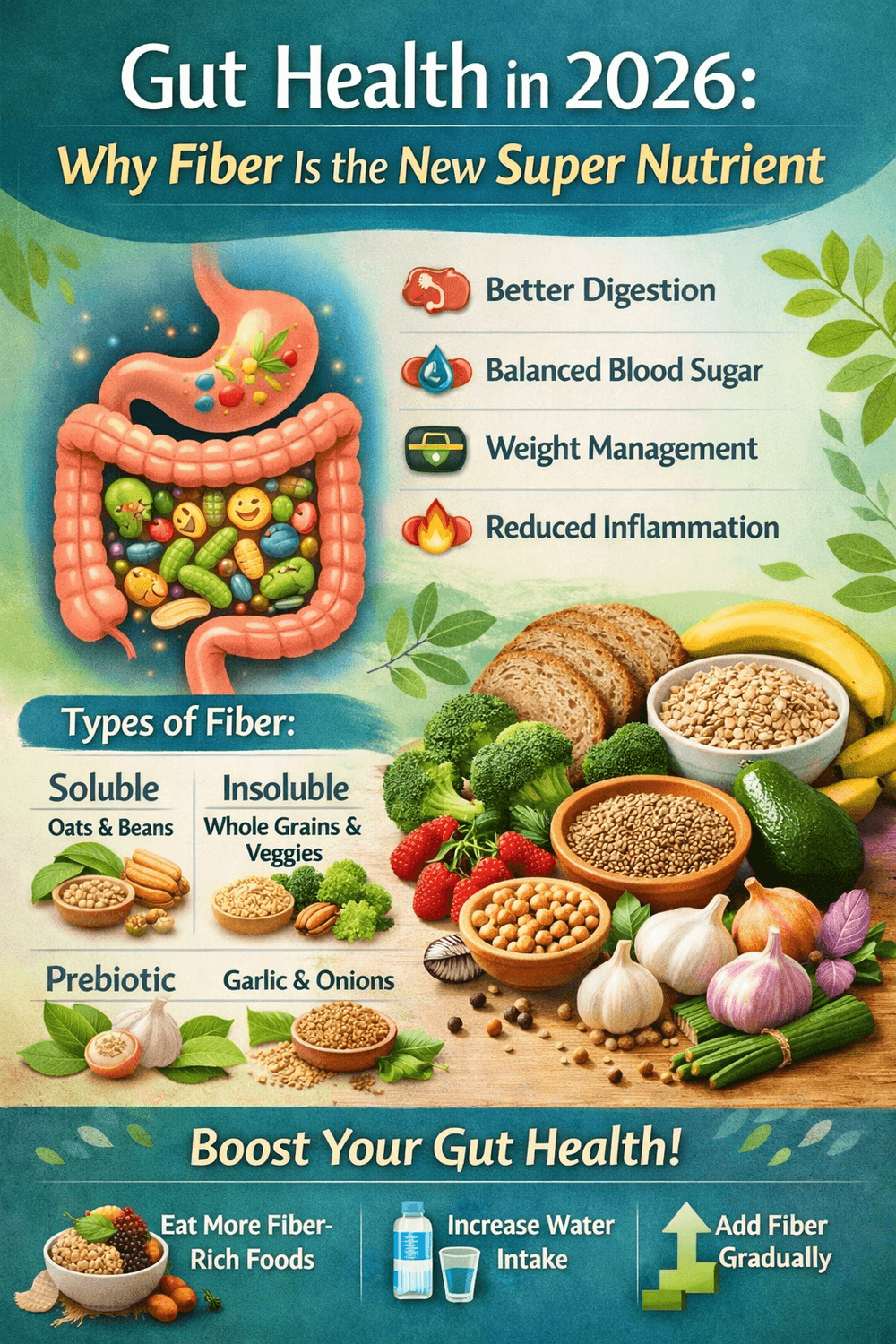
Improve digestion by supporting regular bowel movements and reducing constipation
Stabilize blood sugar levels, preventing sharp energy crashes
Support healthy weight management by increasing satiety and reducing overeating
Reduce chronic inflammation, which is linked to many long-term health conditions
A fiber-rich diet encourages microbial diversity in the gut, which is now considered a key marker of long-term health and disease prevention.
Types of Fiber You Should Know
Not all fiber is the same. Understanding the different types helps you build a more balanced and effective diet.
Soluble Fiber
This type dissolves in water and forms a gel-like substance in the gut.
Benefits:
Helps lower cholesterol
Supports blood sugar control
Feeds beneficial gut bacteria
Common sources:
Oats, beans, apples, citrus fruits, flaxseeds
Insoluble Fiber
This type does not dissolve in water and adds bulk to stool.
Benefits:
Supports regular digestion
Helps prevent constipation
Promotes gut motility
Common sources:
Whole grains, brown rice, leafy greens, carrots, broccoli
Prebiotic Fiber
Prebiotics are a special type of fiber that specifically nourish beneficial bacteria in the gut.
Benefits:
Strengthens the gut microbiome
Supports immune health
Improves nutrient absorption
Common sources:
Chicory root, garlic, onions, leeks, asparagus, bananas
Signs You
Signs You’re Not Getting Enough Fiber
Many people consume far less fiber than recommended, often without realizing it. Common signs of low fiber intake include:
Frequent bloating or digestive discomfort
Low or inconsistent energy levels
Irregular digestion or constipation
Strong sugar or refined carbohydrate cravings
If these symptoms are persistent, increasing fiber intake through whole foods may provide noticeable improvement within weeks.
How to Increase Fiber Safely
While fiber is essential, increasing intake too quickly can cause discomfort. A gradual, mindful approach works best.
Practical tips:
Add fiber slowly to allow your gut to adapt
Increase water intake, as fiber requires hydration to function properly
Prioritize whole foods such as vegetables, fruits, legumes, and whole grains
Use supplements cautiously, and only when whole foods are insufficient
Consistency matters more than perfection. Small daily improvements compound over time.
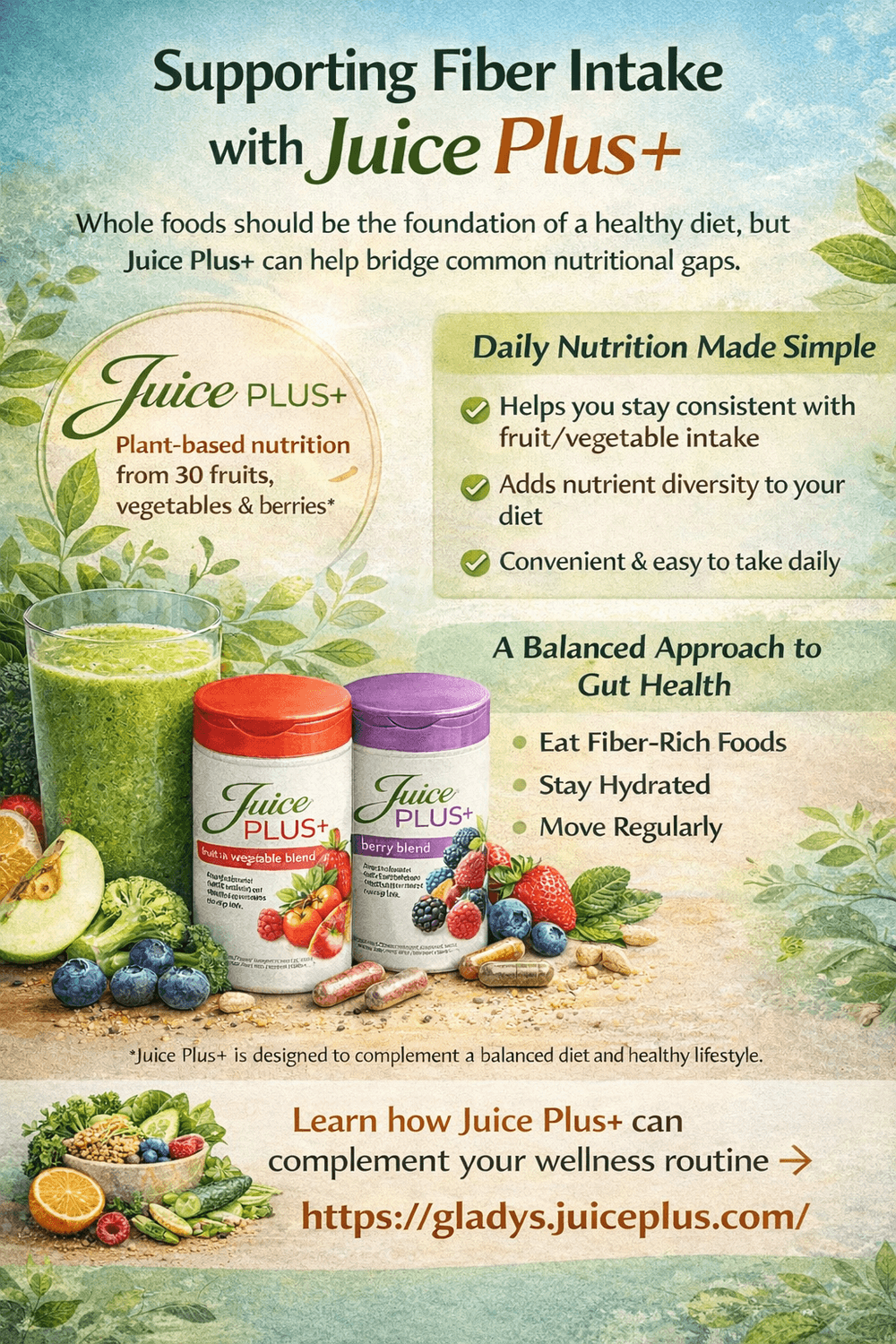
Looking for an easy way to support your daily nutrition alongside a fiber-rich diet? Learn more about Juice Plus+ and how it complements a gut-health-focused lifestyle visit here
Conclusion
Supporting gut health through fiber-rich foods is one of the simplest, most affordable, and sustainable health strategies available in 2026. Rather than chasing trends or restrictive plans, focusing on fiber helps create a strong foundation for digestion, energy, metabolic balance, and long-term wellbeing.
By prioritizing whole foods and mindful nutrition, you empower your body to function optimally—starting from the gut.
SHARE


